

Tea Towels: How to Choose, Use and Care for This Kitchen Essential
There are few household items quite as useful—or as overlooked—as the humble tea towel.
I know I use mine every day…many times a day! It dries dishes, catches spills, covers freshly baked bread and is slung over a shoulder—or tucked into an apron—when our hands are occupied with washing and cooking. It may even be hastily employed to make the kitchen look presentable when someone arrives unexpectedly.
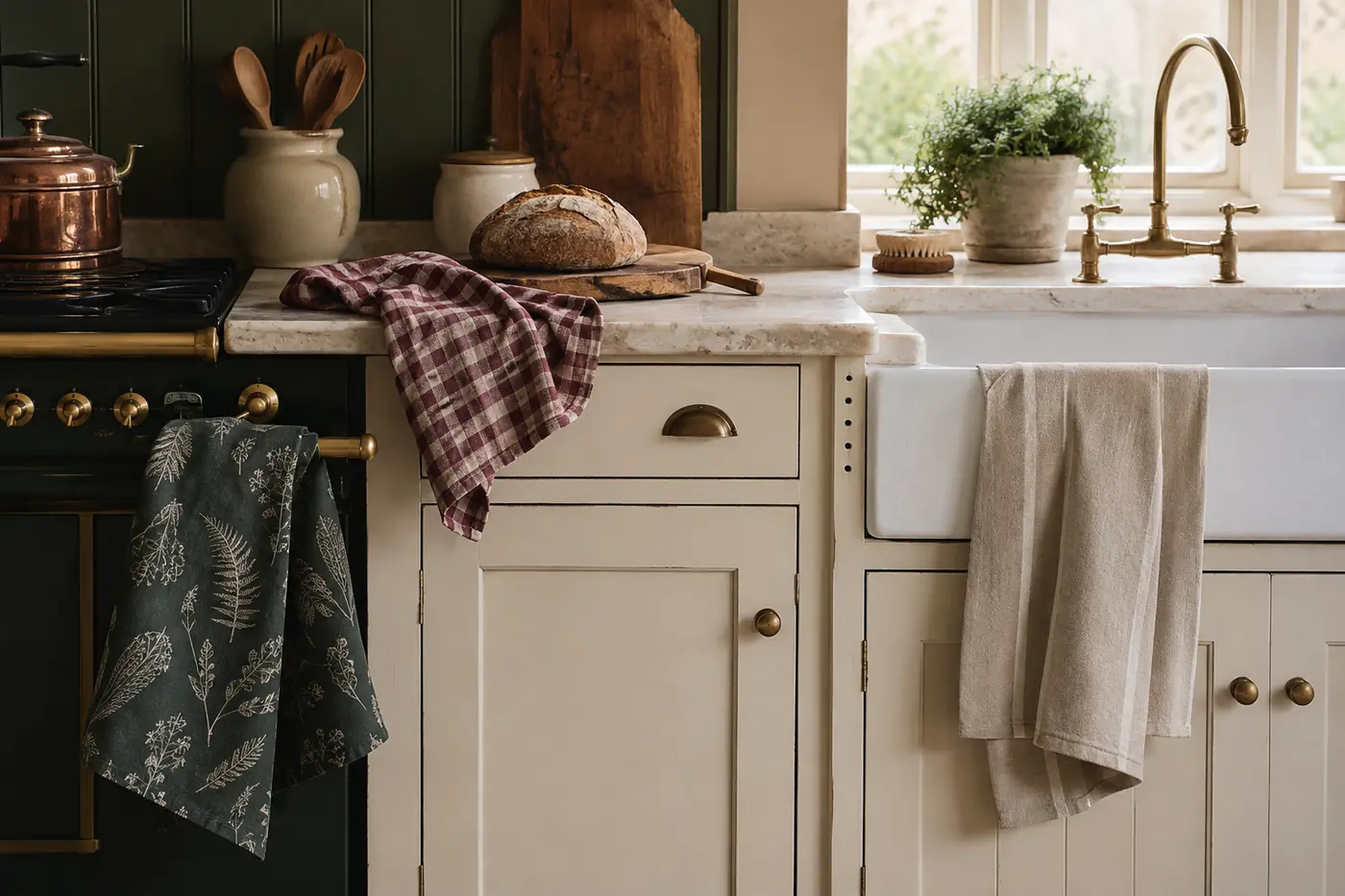
Tea towels are practical by nature, but that does not mean they cannot also be beautiful. In fact, because they are nearly always visible, the right tea towels can add colour, texture and personality to the kitchen without requiring a complete redesign.
So, what should we look for when choosing a tea towel, and how can we keep our tea towels absorbent, fresh and useful for as long as possible?
What Is a Tea Towel? (Genuinely—Some Countries Don’t Use Them!)
A tea towel is a lightweight cloth traditionally used for drying dishes, cutlery and glassware.
Unlike thicker hand towels, tea towels are usually made from cotton, linen or a combination of the two. Their flatter weave allows them to reach into the corners of glasses, dry delicate crockery and absorb moisture without leaving fluff—also known as lint—behind.
The name is thought to reflect their historic use during tea service, when fine cloths were used to dry and handle delicate china. Today, the tea towel has become one of the hardest-working items in the kitchen.
What Can Tea Towels Be Used For?
Most of us use tea towels primarily for drying the washing-up, but a good tea towel can do far more than that.
Tea towels can be used to:
- Dry dishes, glasses and cutlery
- Dry washed fruit and vegetables
- Cover bread dough while it rises
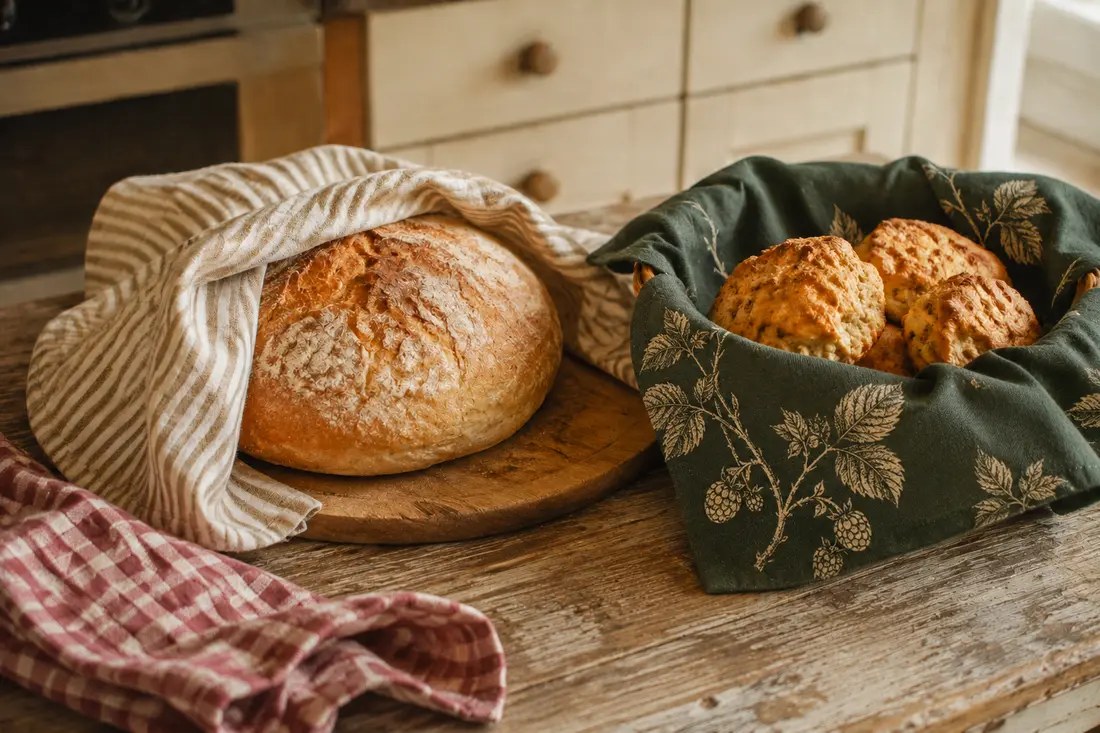
- Wrap or cover freshly baked bread and scones
- Protect a table or worktop from scratches
- Line a breadbasket or serving tray
- Hold herbs or salad leaves after washing
- Cover prepared food before it is served
- Add colour and interest to the kitchen
- Wrap a bottle, loaf or homemade gift
- Wipe down surfaces when used damp
It is sensible to keep different tea towels for different purposes. The cloth used to dry clean glasses, for example, should not be the same one used to wipe up spills from the floor.
Separating tea towels according to their purpose helps to keep the kitchen hygienic and means that a clean, dry one is more likely to be available when you need it.
Which Material Makes the Best Tea Towel?
The best material depends on how you intend to use your tea towel.
Cotton Tea Towels
Cotton tea towels are soft, durable and generally easy to wash. They are a dependable everyday choice for busy kitchens and are especially useful for drying dishes and wiping clean work surfaces.
Cotton tea towels are among the most readily available and frequently purchased.
A good-quality cotton tea towel will usually become softer and more absorbent after it has been washed several times.
Linen Tea Towels
Linen tea towels are particularly good for drying glassware because they tend to leave very little lint behind. Linen is strong, quick-drying and often becomes softer with age.
It can feel slightly firmer than cotton when new, but a well-used linen tea towel develops a lovely softness and character over time—usually years later!
Cotton and Linen Blends
A cotton-linen blend offers some of the softness of cotton alongside the strength and quick-drying qualities of linen. This can make it a good all-round choice for both practical use and kitchen display.
Whatever material you choose, look for a tea towel that feels substantial enough to absorb water but not so thick that it remains damp for hours.
Why Aren’t New Tea Towels Always Absorbent?
One of the most frustrating things about buying new tea towels is discovering that they seem to push the water around rather than absorb it.
This can happen because new fabric may contain finishing treatments left over from manufacturing. These help the fabric look smooth and crisp in the shop, but they can temporarily reduce its absorbency.
Washing new tea towels before their first use will usually help. Some may need to be washed two or three times before they reach their best.
Avoid using too much fabric conditioner, as it coats the fibres and can make tea towels less absorbent. They may smell lovely, but they will not necessarily dry your dishes very well.
How Often Should Tea Towels Be Washed?
Tea towels should be changed regularly—especially if they have become damp, have been used during food preparation or have wiped up a spill.
In a busy family kitchen, this may mean replacing the tea towel every day. A lightly used cloth may remain suitable for a little longer, provided it has been able to dry properly between uses.
The important thing is not to leave a damp tea towel crumpled on a worktop or hanging somewhere with very little airflow. Damp fabric can quickly begin to smell stale.
Keeping several tea towels in rotation makes it much easier to replace them as soon as needed rather than trying to make one last all week. I actually have three in rotation, hung on the towel rail in front of the oven.
How to Wash Tea Towels
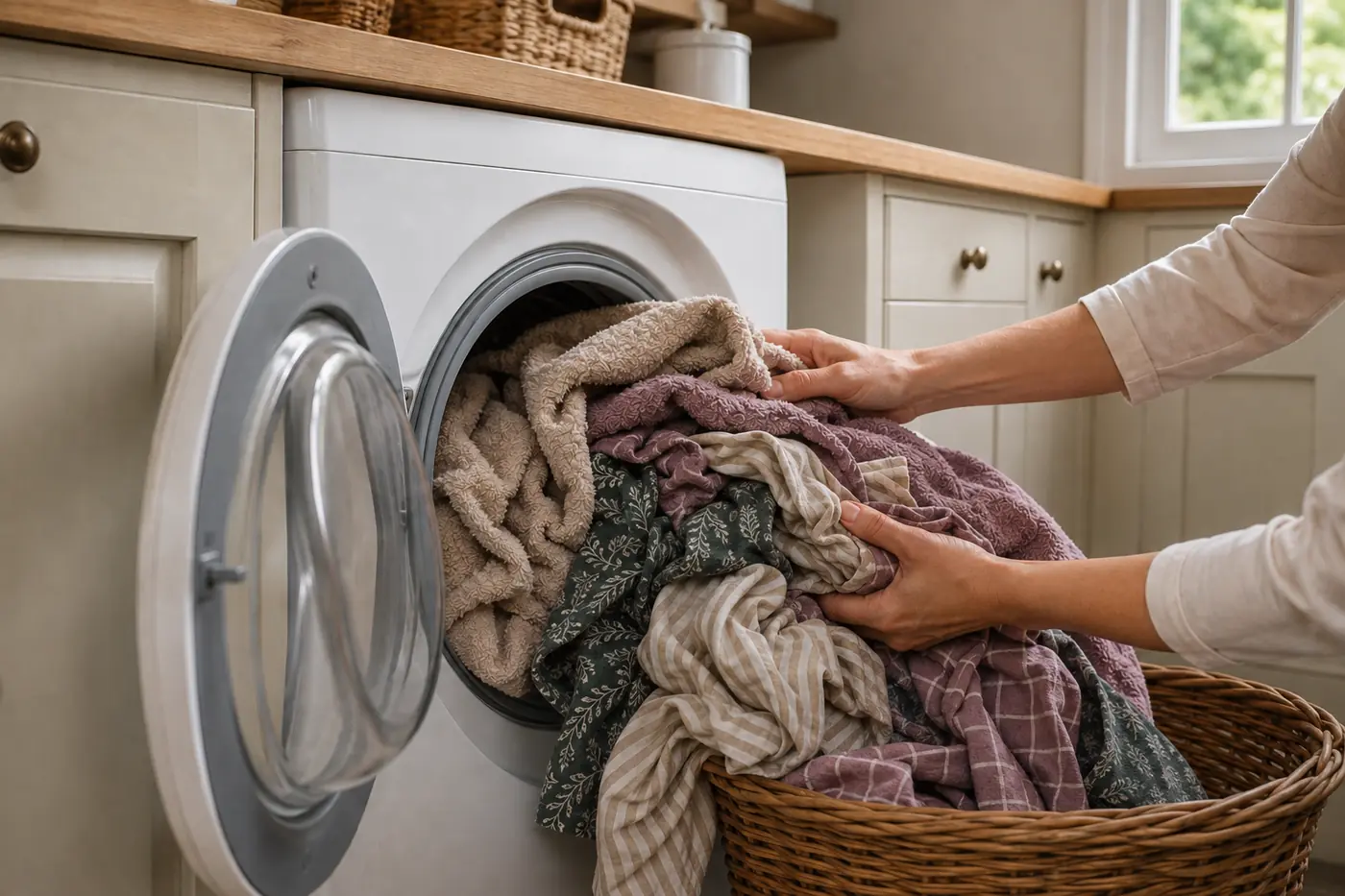
Always check the care label first, particularly if your tea towels are printed, embroidered or made from a specialist fabric.
As a general rule:
- Wash tea towels separately from heavily soiled items
- Use an appropriate washing temperature for the fabric
- Avoid overloading the washing machine
- Treat stains promptly when necessary
- Limit fabric conditioner to preserve absorbency
- Allow tea towels to dry completely before folding them away
I wash my tea towels with my bath towels because neither requires fabric conditioner.
White tea towels may tolerate stronger stain treatments, but coloured or printed tea towels need gentler care to prevent fading.
If a tea towel has been used to clean up raw meat juices or another potentially harmful spill, it should be washed promptly using a suitable hygienic wash.
How Many Tea Towels Do You Need?
There is no perfect number, but most homes benefit from having enough tea towels to separate different uses and still maintain a clean supply while the others are being washed.
For an average household, somewhere between seven and twelve tea towels is often practical. A household that cooks frequently, bakes bread or entertains regularly may need more.
A useful collection might include:
- Everyday tea towels for dishes
- Lint-free tea towels for glasses
- Cloths reserved for baking and covering food
- Older tea towels for messy spills
- Decorative tea towels for serving or display
Once a favourite tea towel becomes too worn for drying dishes, it can often be demoted to cleaning duty rather than immediately thrown away.
Can Tea Towels Be Decorative as Well as Practical?
Absolutely.
A tea towel is one of the simplest ways to introduce a seasonal colour or pattern into the kitchen. It can soften the overall feel of the room and make it seem warmer and more homely.
Botanical designs work particularly well in country and traditional kitchens, while stripes, checks and simple woven textures suit almost any style. A thoughtfully designed tea towel can look lovely folded over an oven rail, hung beside the sink or used to line a basket.
The key is to choose tea towels that are attractive enough to display but practical enough to use. Beautiful household textiles should not have to remain untouched in a drawer.
Choosing Tea Towels That Will Last
When buying tea towels, consider more than the pattern alone.
Look at the fabric, stitching and overall finish. The edges should be neatly hemmed, the hanging loop—if it has one—should feel secure, and the material should be suitable for its intended purpose.
It is also worth thinking about how the design will age. Classic colours, botanical illustrations and traditional patterns are less likely to feel dated than very short-lived trends.
The best tea towels often improve with use. They soften, become more absorbent and gradually settle into the daily rhythm of the kitchen.
The Humble Tea Towel Deserves a Little More Attention
Tea towels may not be the most exciting purchase we make for our homes, but they are certainly among the most frequently used.
They help us cook, clean, bake, serve and care for the people around us. They can bring colour to a neutral kitchen, make a homemade gift feel special and turn an ordinary breadbasket into something inviting.
A good tea towel should work hard, wash well and still look attractive hanging in the kitchen. Choose carefully, care for it properly and it may remain part of your home for years—with the potential to be passed on to someone one day.